
SUBFAMILY PONERINAE - Genus Leptogenys
|
|
The Ants of
Africa SUBFAMILY PONERINAE - Genus Leptogenys |
| Contents - Ponerinae - PONERINAE Introduction |
In Tribe PONERINI.
Roger's (1861a) genus definition is at 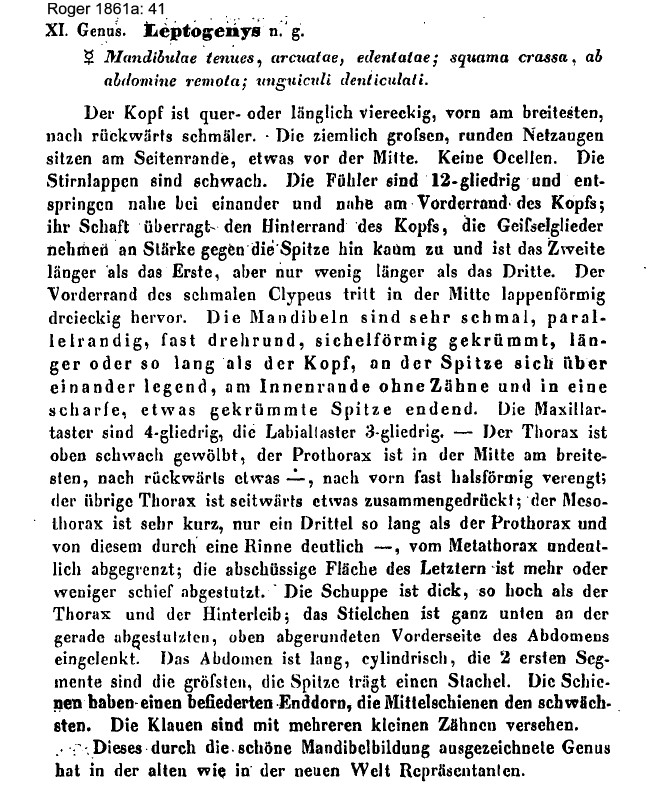 .
.
Comprehensively revised by Bolton (1975a: 237 ff).
Diagnostic Features - Mandibles articulated at extreme corners of anterior margin of head; of varying shape, may be elongate, linear and curved, or short and quite board, but always more or less edentate, with only one or two teeth situated apically. Median portion of clypeus carinate, produced anteriorly into a lobe or point. Lobes of frontal carinae small, in dorsal view usually only partially covering the condylar bulbs of the antennal scapes. Middle and hind tibiae each with one large pectinate and one small simple spur. Claws pectinate, but incompletely so in some species. Gaster weakly impressed between first and second segments.
Described by Bolton (1973a) as distributed throughout West Africa with most species being found in the forest zone, inhabiting wet and rotting wood.
Bernard (1952) noted that they are very slender Ponerines, queens often ergatoid. Basically an oriental group, common and varied in east Africa and Asia. Poorly represented in Guinea, where the two captures made by Lamotte appeared to be new highly striated races of species common to Congo and Rhodesia. It is a general rule with more primitive ants that the mountain races are more striated than those of the lowlands, especially on the sides of the epinotum and the petiole.
All are predatory, feeding on termites and sowbugs (Oniscidae) (Lévieux, 1983b); they have a stridulatory mechanism for auditory signalling (Hölldobler & Wilson, 1990, page 253).
Belshaw & Bolton (1994b) described how they found only one of the 12 species previously recorded from Ghana, plus one undescribed species, and ascribed this to the nocturnal habits of genus members.
Bradshaw & Howse (1984) described the genus as of great interest for the diversity of hunting and raiding techniques which its members employ; terrestrial isopods (woodlice) are among the prey of several species, others consume earthworms and termites.
Key to species of mainland Africa (developed from Bolton, 1975a, and Arnold, 1915):
Mayr's (1862) definition of Lobopelta is
at 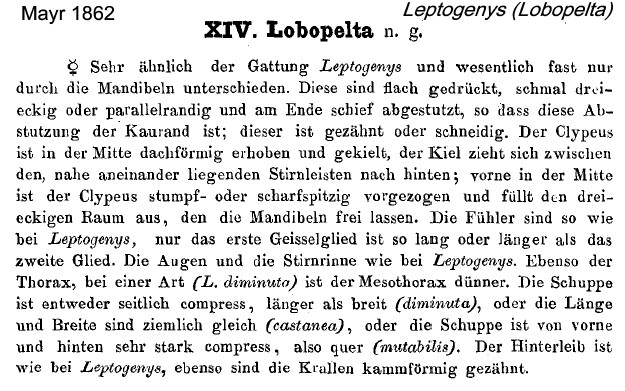 .
Arnold's (1915) translated descriptions and his keys to South African
species is at
.
Arnold's (1915) translated descriptions and his keys to South African
species is at 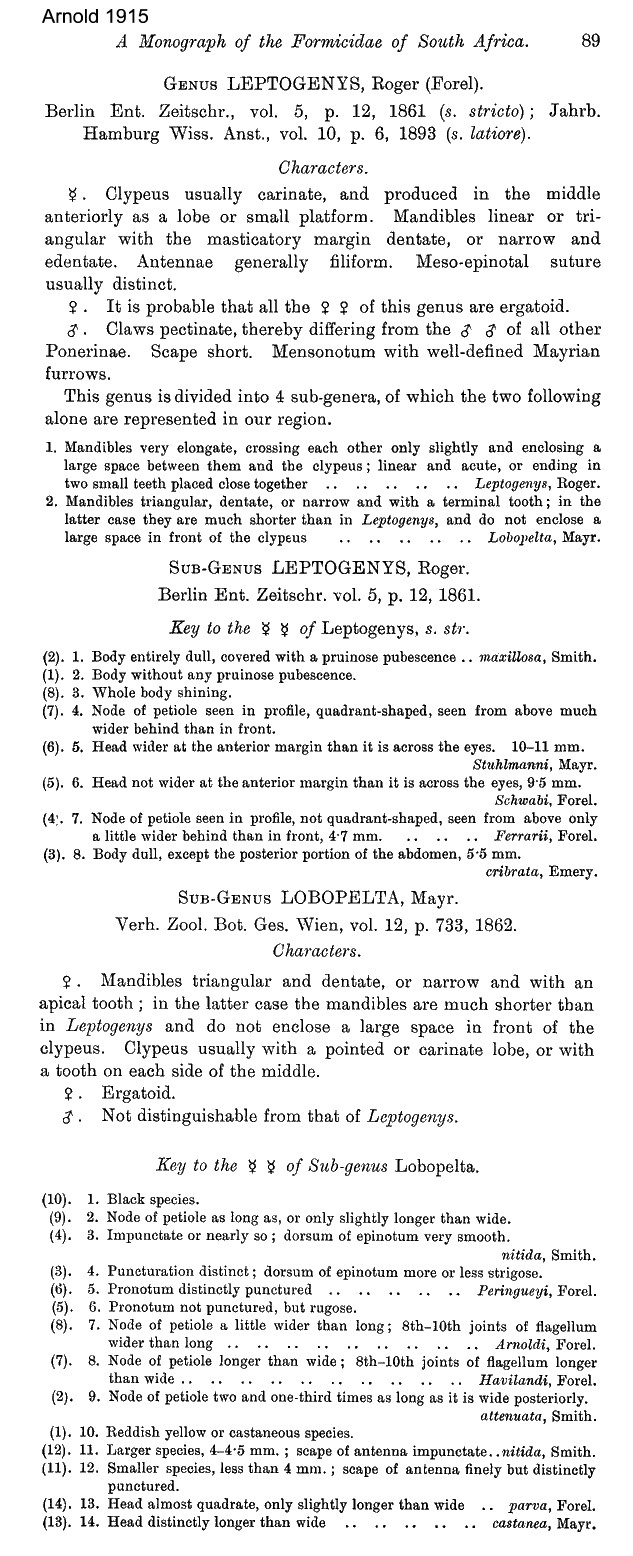 .
.
Bolton (1975) recognised that the old subgenus separations were
untenable, as his comprehensive study revealed transitional forms that
would not fall into the tight definitions.
| 1 | 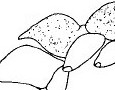 In profile petiole with the
posterodorsal angle projecting as a spine or tooth In profile petiole with the
posterodorsal angle projecting as a spine or tooth |
2 |
| -- | In profile petiole without a spine or tooth | 3 |
| 2 | 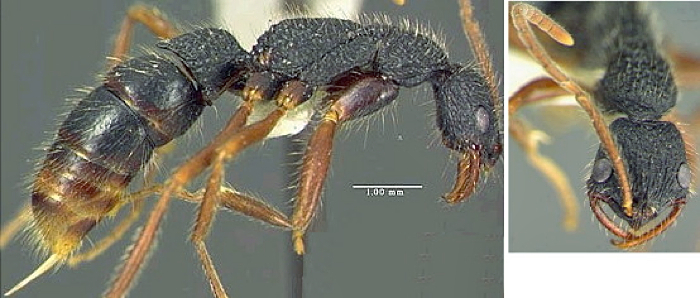 Rugosity of head and
alitrunk overlaid by a dense puncturation; scapes, legs and at least
first gastral tergite reticulate and dull; TL 7.3-9.1 mm; black
appendages red-brown or orange-brown Rugosity of head and
alitrunk overlaid by a dense puncturation; scapes, legs and at least
first gastral tergite reticulate and dull; TL 7.3-9.1 mm; black
appendages red-brown or orange-brown |
Congo Basin - crustosa |
| -- | 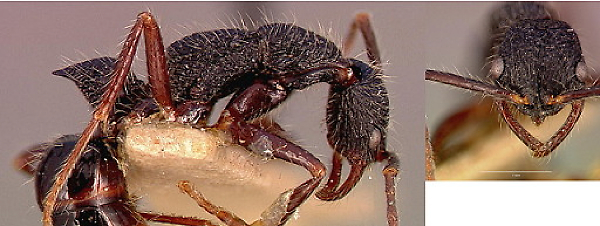 Rugosity
of head and alitrunk not overlaid by a
dense puncturation; first gastral tergite highly polished' TL 9.4-10.4
mm Rugosity
of head and alitrunk not overlaid by a
dense puncturation; first gastral tergite highly polished' TL 9.4-10.4
mm |
West Africa - conradti |
| 3 | Whole body densely shagreened and opaque | 4 |
| -- | Not entirely shagreened, usually not opaque, at least the gaster shining; lacking dense pubescence | 7 |
| 4 | 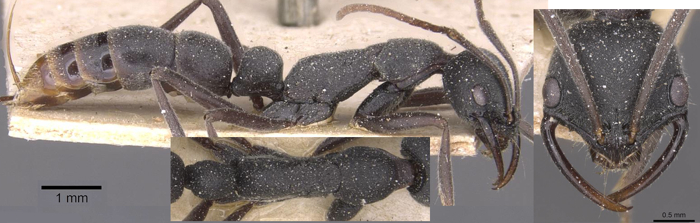 Numerous erect hairs on
dorsum of head, alitrunk and basal two segments of gaster; larger TL
9.6 mm HL > 1.75; dull black, appendages brown Numerous erect hairs on
dorsum of head, alitrunk and basal two segments of gaster; larger TL
9.6 mm HL > 1.75; dull black, appendages brown |
Tanzania - jeanneli |
| -- | Without erect hairs; smaller HL < 1.75 | 5 |
| 5 | 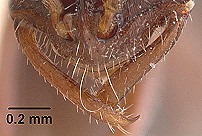 Fringing
lamella of clypeus broad and broadly
rounded; outer margin of mandible straight or concave distally; head
divergent anteriorly; Fringing
lamella of clypeus broad and broadly
rounded; outer margin of mandible straight or concave distally; head
divergent anteriorly; |
6a |
| -- | 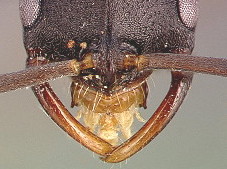 Fringing lamella of clypeus
narrow; outer margin of mandible convex; sides of head divergent
anteriorly Fringing lamella of clypeus
narrow; outer margin of mandible convex; sides of head divergent
anteriorly |
6b |
| 6a | 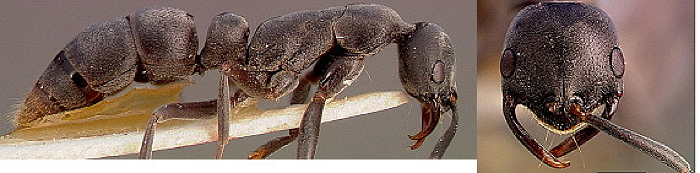 TL
6.8-7.6 mm; quite finely but densely
sculptured, giving weakly shiny appearance TL
6.8-7.6 mm; quite finely but densely
sculptured, giving weakly shiny appearance |
East Africa also Cameroun & Senegal - pavesii |
| -- | 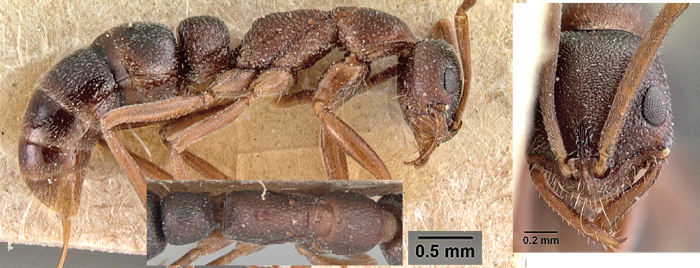 TL
5.0-5.5 mm; petiole node longer than broad,
near rectangular; overall sculpturation of a fairly coarse dense
puncturation giving dull appearance TL
5.0-5.5 mm; petiole node longer than broad,
near rectangular; overall sculpturation of a fairly coarse dense
puncturation giving dull appearance |
revived status - South Africa - cribrata |
| 6b | 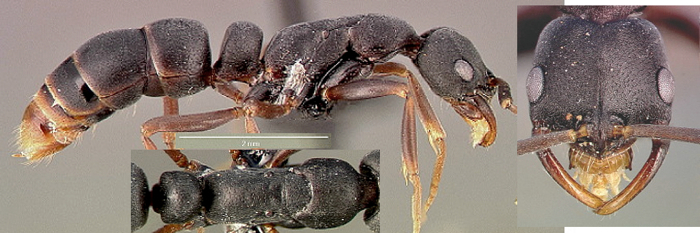 In
dorsal view petiole node distinctly broader
than long; TL 6.8-7.5 mm; with dense pruinose pubescence; finely
sculptured and fairly shiny In
dorsal view petiole node distinctly broader
than long; TL 6.8-7.5 mm; with dense pruinose pubescence; finely
sculptured and fairly shiny |
Eastern & southern Africa (and tramp) - maxillosa |
| -- | 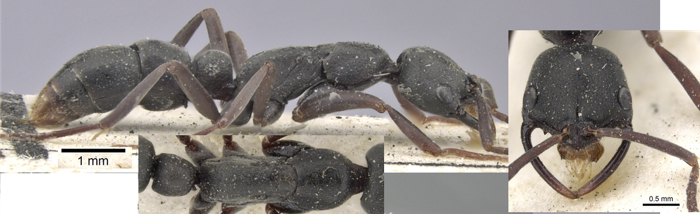 In dorsal view petiole node
at least as broad as long; TL 7.0-7.8 mm In dorsal view petiole node
at least as broad as long; TL 7.0-7.8 mm |
Madagascar (and tramp) - falcigera |
 -- -- |
Not entirely shagreened, usually not opaque, at least the gaster shining | -- |
| 7 | First and second gastral tergites without hairs; with sparse strongly appressed pubescence; eyes minute | 8 |
| -- | First and second gastral tergites with hairs; if such hairs sparse, either eyes larger (wider than scape) or gaster strongly constricted between first and second segments, or both | 11 |
| 8 | 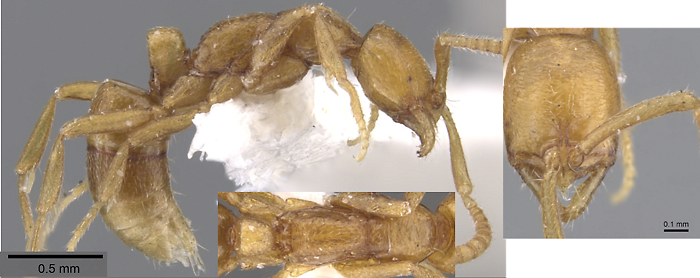 Minute
species, TL 2.7-2.9 mm (HL < 0.70, PW < 0.42) with minute
eyes; pronotal dorsum with a pair of long erect hairs anteriorly;
uniform dull yellow Minute
species, TL 2.7-2.9 mm (HL < 0.70, PW < 0.42) with minute
eyes; pronotal dorsum with a pair of long erect hairs anteriorly;
uniform dull yellow |
Ivory Coast - microps |
| -- | Larger species (HW > 0.75, PW > 0.45) with larger eyes; pronotal dorsum without paired long hairs | 9 |
| 9 | 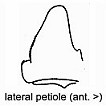 Pronotal dorsum without
short standing hairs; petiole profile a thick scale tapered dorsally;
larger species, TL 6.8 mm with relatively long antennal scapes (HL
> 1.25, SI > 140); brown, appendages yellow-brown Pronotal dorsum without
short standing hairs; petiole profile a thick scale tapered dorsally;
larger species, TL 6.8 mm with relatively long antennal scapes (HL
> 1.25, SI > 140); brown, appendages yellow-brown |
. |
| . | 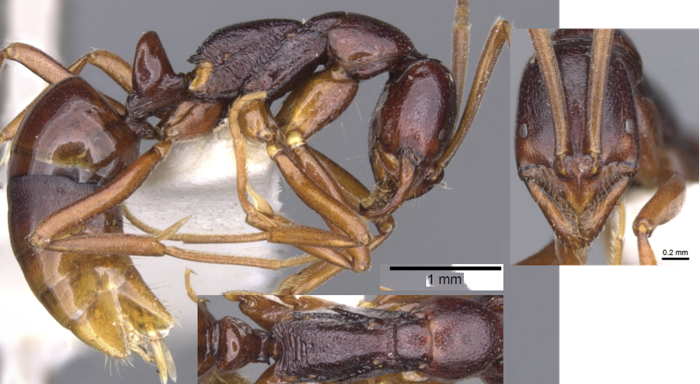 |
Ghana - spandax |
| -- | Pronotal dorsum with numerous short standing hairs; petiole profile not a thick scale but a high narrow node; smaller species with relatively short antennal scapes (HL < 1.10, SI < 130) | 10 |
| 10 | 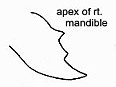 Apex of mandible with 3
teeth, apical plus 2 preapical; TL 3.5-3.7 mm; light brown, shiny,
appendages lighter Apex of mandible with 3
teeth, apical plus 2 preapical; TL 3.5-3.7 mm; light brown, shiny,
appendages lighter |
. |
| . | 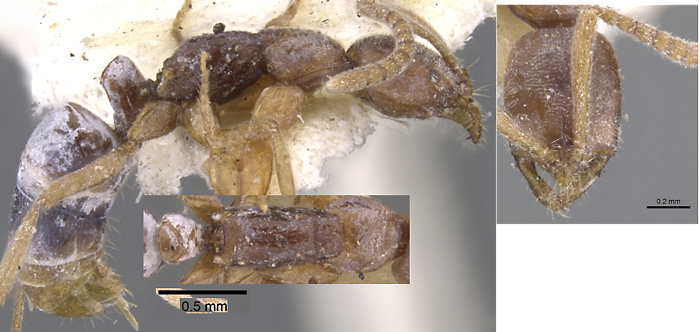 |
Ghana - testacea |
| -- | 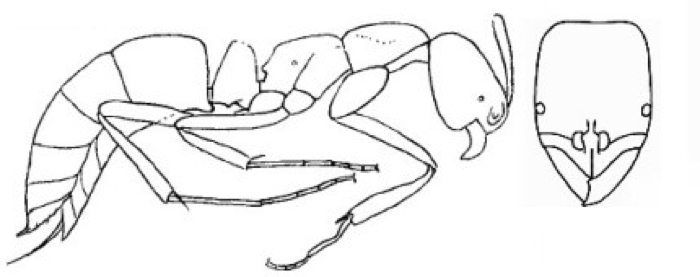 Apex of mandible with
2
teeth, apical and 1 preapical; TL 4.3-4.5 mm; glossy brown, appendages
lighter Apex of mandible with
2
teeth, apical and 1 preapical; TL 4.3-4.5 mm; glossy brown, appendages
lighter |
. |
| . | 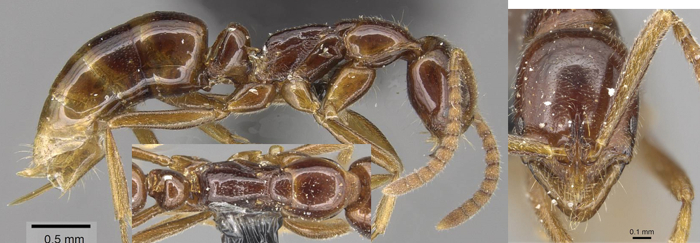 |
West Africa - guineensis |
| -- |
First and second gastral tergites with hairs | -- |
| 11 | Petiole profile with upper halves of the sides longitudinally rugose or sulcate | 12 |
| -- | Petiole profile with upper halves of the sides not longitudinally rugose or sulcate | 15 |
| 12 | Pronotal dorsum unsculptured apart from hair pits | 13 |
| -- | Pronotal dorsum sculptured at least anteriorly | 14 |
| 13 | 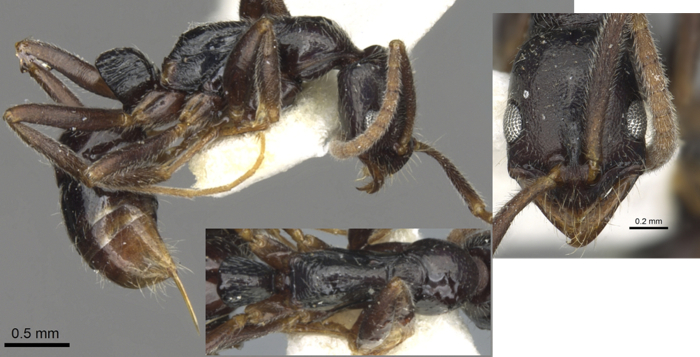 In full face view
occipital
margin broadly concave; TL 4.5-4.6 mm; black with appendages brown In full face view
occipital
margin broadly concave; TL 4.5-4.6 mm; black with appendages brown |
Guinea & Liberia - occidentalis |
| -- | 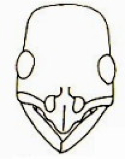 In full face view
occipital
margin feebly convex; TL 4.6 mm; black, appendages brown In full face view
occipital
margin feebly convex; TL 4.6 mm; black, appendages brown |
. |
| . |  |
Cameroun & Gabon - sulcinoda |
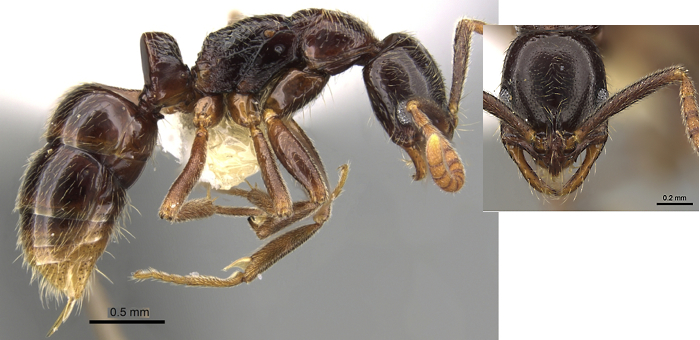
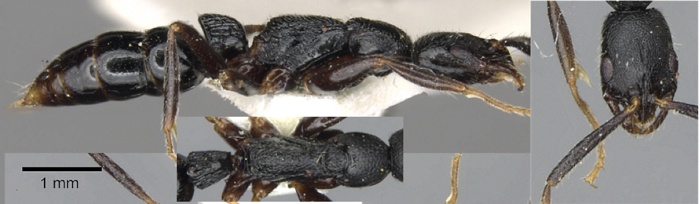
| 14 | 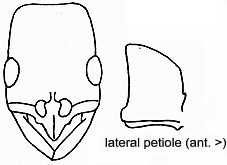 Larger species, TL 4.7-5.0
mm; with relatively long head and scapes (HL > 1.00, PW >
0.58, CI < 65, SI >140); black, appendages brown Larger species, TL 4.7-5.0
mm; with relatively long head and scapes (HL > 1.00, PW >
0.58, CI < 65, SI >140); black, appendages brown |
. |
| . |  |
West Africa - mastax |
| -- | 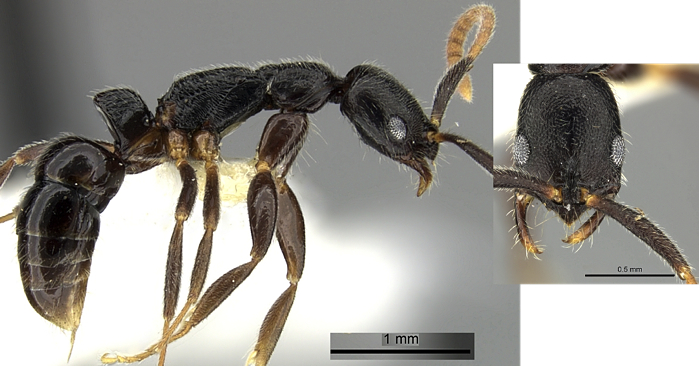 Smaller species, TL 3.5-4.1 mm;
with relatively short head and scapes (HL < 1.00, PW <
0.58, CI > 65, SI < 135); black, appendages brown,
funiculi yellow-brown Smaller species, TL 3.5-4.1 mm;
with relatively short head and scapes (HL < 1.00, PW <
0.58, CI > 65, SI < 135); black, appendages brown,
funiculi yellow-brown |
West Africa - nuserra |
| -- |
Petiole profile with upper halves of the sides not longitudinally rugose or sulcate | -- |
| 15 | Mandibles elongated narrow linear or sublinear blades, inner margins often concave, and not capable of closing tightly against the median lobe of the clypeus | 16 |
| -- | Mandibles short, usually quite stout, with convex inner margins, capable of closing against clypeus | 35 |
| 16 | Antennal scapes with SL > 1.90; gaster very weakly or not constricted between first and second segments; metanotal groove not cross-ribbed or sculptured | 17 |
| -- | Antennal scapes with SL < 1.70; gaster distinctly constricted between first and second segments; metanotal groove distinctly cross-ribbed or sculptured | 27 |
| 17 | In full-face view eyes not breaking outline of head; antennal scapes with dense pubescence but without erect hairs equalling or exceeding width of scape; large species with short scapes (HL > 2.10) | 18 |
| -- | In full-face view eyes breaking outline of head; antennal scapes with numerous erect hairs equalling or exceeding width of scape, scape pubescence sparse; smaller species with long scapes | 19 |
| 18 | 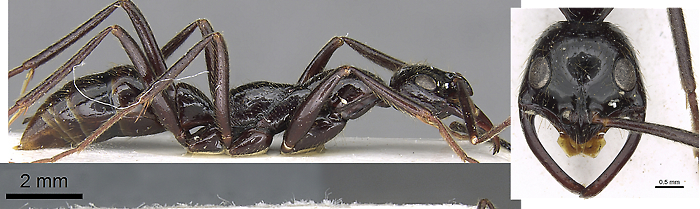 Dorsum of
pronotum and propodeum unsculptured; eye diameter ca 0.60; TL 13.6 mm;
black, appendages, dark brown Dorsum of
pronotum and propodeum unsculptured; eye diameter ca 0.60; TL 13.6 mm;
black, appendages, dark brown |
Cameroun - titan |
| -- | 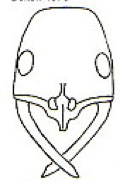 Dorsum of pronotum
and
propodeum unsculptured; eye diameter ca 0.50; TL 11.2-11.4 mm; Dorsum of pronotum
and
propodeum unsculptured; eye diameter ca 0.50; TL 11.2-11.4 mm; |
. |
| . | 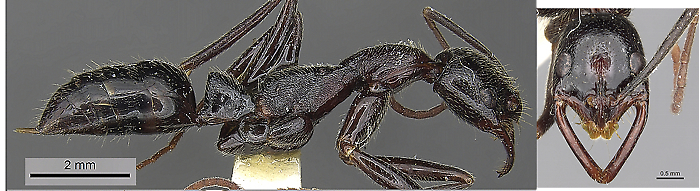 |
Kenya & Tanzania - regis |
| 19 | Entire alitrunk dorsum unsculptured; sides similar apart from cross-ribbing at meso-metapleural suture and a few rugae; mature adult brown or deep red-brown with blue-violet opalescence | 20 |
| -- | Propodeal dorsum weakly to strongly sculptured; sides with pleurae and propodeum striate or rugose; mature adult black or brown without opalescence | 21 |
| 20 | 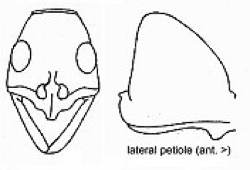 Larger species, TL
11.0-12.0
mm; with long scapes SL > 2.75; red-brown or brown, appendgaes
lighter, head and alitrunk with weak blue or violet opalesence Larger species, TL
11.0-12.0
mm; with long scapes SL > 2.75; red-brown or brown, appendgaes
lighter, head and alitrunk with weak blue or violet opalesence |
. |
| . | 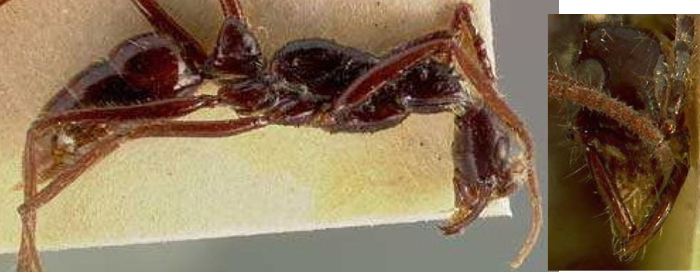 |
Congo Basin - camerunensis |
| -- | 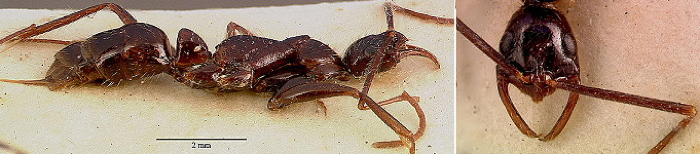 Smaller,
TL 8.3-9.1 mm, with shorter scapes SL
< 2.60; deep red-brown with patchy bluish ro violet opalescence Smaller,
TL 8.3-9.1 mm, with shorter scapes SL
< 2.60; deep red-brown with patchy bluish ro violet opalescence |
Mozambique - leiothorax |
| 21 | 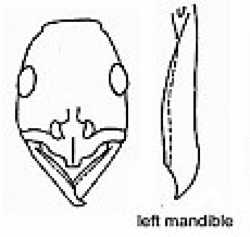 Inner margin of
mandible
with a convex semi-translucent lamella; TL 8.1-9.0 mm; black,
appendages lighter Inner margin of
mandible
with a convex semi-translucent lamella; TL 8.1-9.0 mm; black,
appendages lighter |
. |
| . | 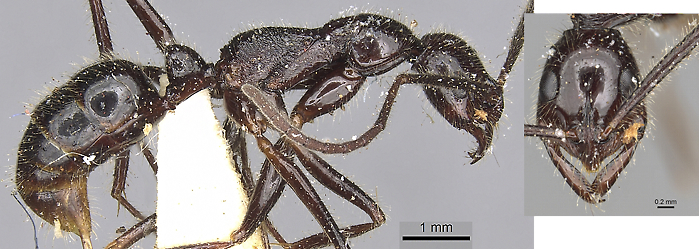 . . |
Ghana - zapyxis |
| -- | Inner margin of mandible without a convex semi-translucent lamella | 22 |
| 22 | Antennal scapes with SI < 200 | 23 |
| -- | Antennal scapes with SI > 200 | 24 |
| 23 | 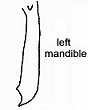 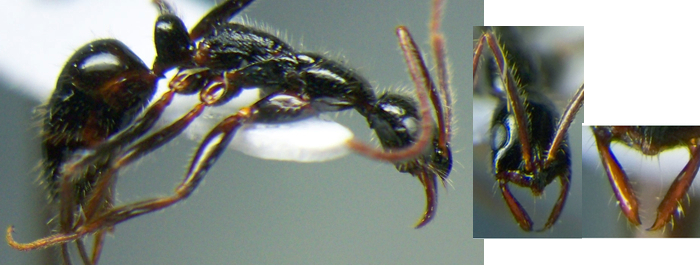 Smaller, TL 8.0-8.2 mm; HL
< 1.60; pronotum dorsum unsculptured; dark brown, appendages
lighter, head and gaster darker part black Smaller, TL 8.0-8.2 mm; HL
< 1.60; pronotum dorsum unsculptured; dark brown, appendages
lighter, head and gaster darker part black |
Ivory Coast & Gambia - sterops |
| -- | 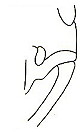 Larger TL 9.6-10.4 mm,HL
> 1.80; pronotum dorsum weakly sculptured; black Larger TL 9.6-10.4 mm,HL
> 1.80; pronotum dorsum weakly sculptured; black |
. |
| . | 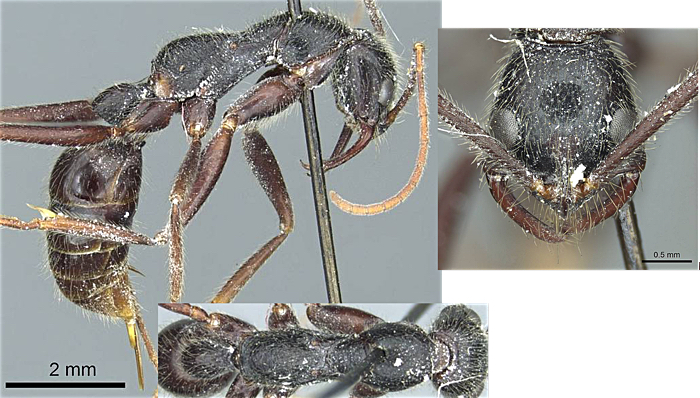 |
Eastern Africa - stuhlmanni |
| 24 | 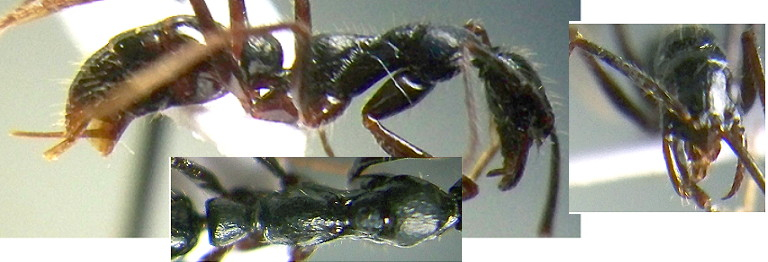 Dorsum
of head and pronotum distinctly
sculptured all over; TL 9.0 mm; very deep brown, gaster lighter brown,
appendages mid-brown and shiny Dorsum
of head and pronotum distinctly
sculptured all over; TL 9.0 mm; very deep brown, gaster lighter brown,
appendages mid-brown and shiny |
Cameroun & Congo - vindicis |
| -- | Dorsum of head unsculptured apart from minute hair-pits; pronotum and gaster similar | 25 |
| 25 | 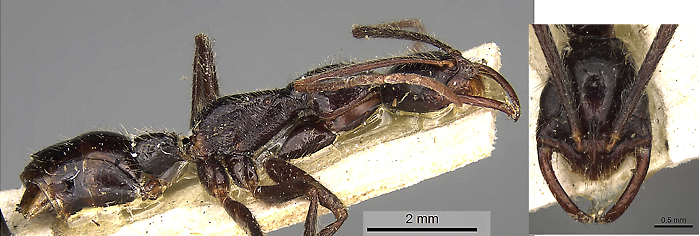 Larger
species, TL 9.7-10.8 mm, with very large eyes HL > 1.90; brown Larger
species, TL 9.7-10.8 mm, with very large eyes HL > 1.90; brown |
Eritrea - erythraea |
| -- | Smaller species with smaller eyes HL < 1.85 | 26 |
| 26 | 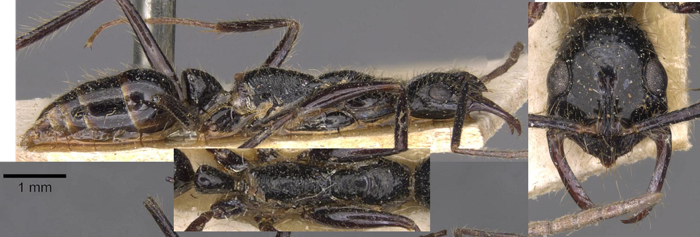 Head sides
more or less parallel; TL 8.4-9.8 mm Head sides
more or less parallel; TL 8.4-9.8 mm |
Zimbabwe, South Africa - schwabi |
| -- | 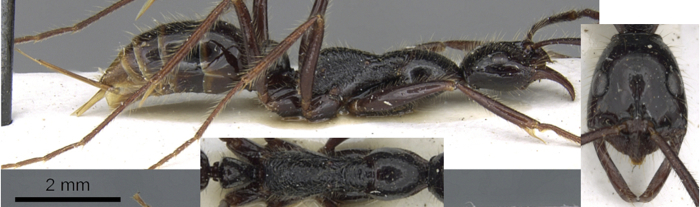 Head much wider anteriorly; TL 9.1
mm; black, appendages brown Head much wider anteriorly; TL 9.1
mm; black, appendages brown |
Cameroun - nebra |
| -- |
Antennal scapes with SL < 1.70; gaster distinctly constricted between first and second segments; metanotal groove distinctly cross-ribbed or sculptured | -- |
| 27 | Dorsum of head finely rugose or reticulate-rugose, with spaces between rugae finely punctate | 28 |
| -- | Dorsum of head reticulate-punctate or punctate with smooth areas between | 29 |
| 28 | 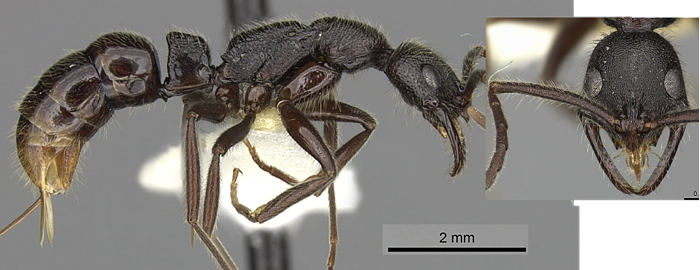 Pronotal
dorsum all over with fine dense reticulation; larger, TL 7.8 mm (HL
> 1.30, SL > 1.40); black, gaster dark brown, appendages
brown Pronotal
dorsum all over with fine dense reticulation; larger, TL 7.8 mm (HL
> 1.30, SL > 1.40); black, gaster dark brown, appendages
brown |
Cameroun - terroni |
| -- | 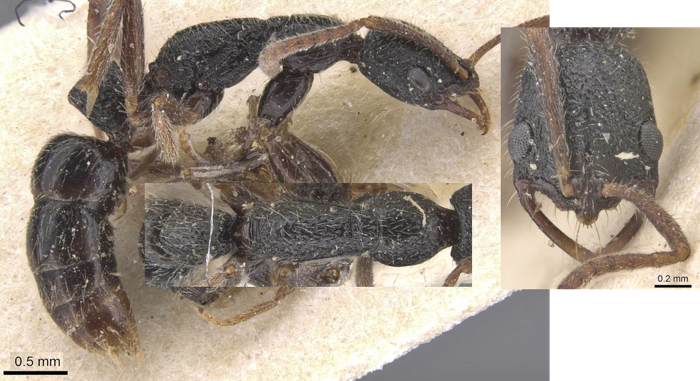 Pronotal dorsum with
no more
than a few rugulae; smaller, TL 5.4-5.6 mm (HL < 1.20, SL
< 1.20); black, appendages light brown Pronotal dorsum with
no more
than a few rugulae; smaller, TL 5.4-5.6 mm (HL < 1.20, SL
< 1.20); black, appendages light brown |
Cameroun - trilobata |
| 29 | 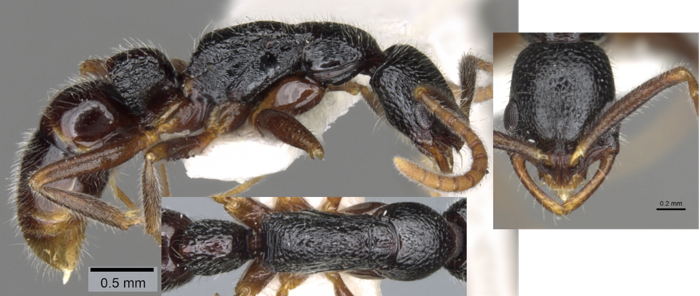 Most of
head strongly sculptured; TL 5.0 mm; shiny black, gaster dark brown,
appendages lighter browm, funiculi lighter than scapes Most of
head strongly sculptured; TL 5.0 mm; shiny black, gaster dark brown,
appendages lighter browm, funiculi lighter than scapes |
Zaïre - excellens |
| -- | Most of head unsculptured or no more than finely reticulate | 30 |
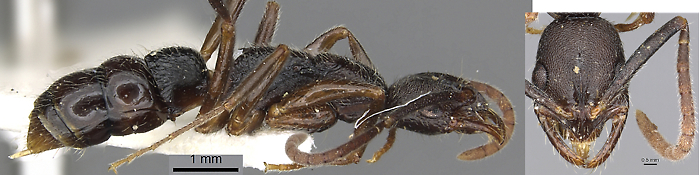
| 30 | 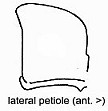 Dorsum of head coarsely and
closely reticulate-punctate; massive petiole node; TL 5.9 mm (HL
> 1.20); dark brown Dorsum of head coarsely and
closely reticulate-punctate; massive petiole node; TL 5.9 mm (HL
> 1.20); dark brown |
. |
| . |  . . |
Ghana - princeps |
| -- | Dorsum of head with scattered punctures and smooth areas between; petiole node smaller | 31 |
| 31 | 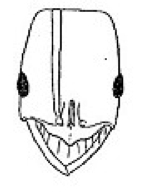 Mesopleuron
completely
reticulate-punctate, plus numerous transverse rugulae; petiole dorsum
and upper sides reticulate-punctate on a coarser rugulation; TL 4.2-4.5
mm Mesopleuron
completely
reticulate-punctate, plus numerous transverse rugulae; petiole dorsum
and upper sides reticulate-punctate on a coarser rugulation; TL 4.2-4.5
mm |
. |
| . | 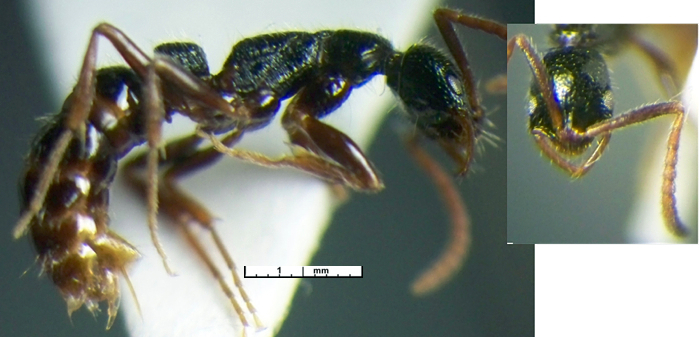 |
West Africa - longiceps |
| -- | Mesopleuron not reticulate-punctate, extensive smooth areas; petiole with no more than rugulation on upper halves of sides | 32 |
| 32 | 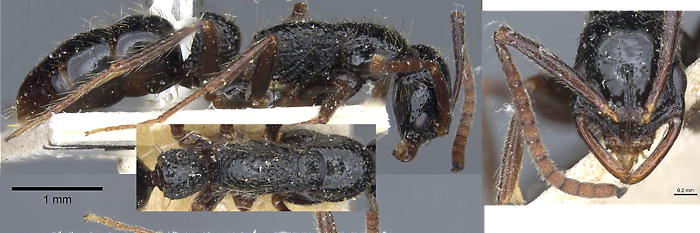 Posterodorsal
margin of petiole with obtuse median tubercle Posterodorsal
margin of petiole with obtuse median tubercle |
Ethiopia - bellii |
| -- | Posterodorsal margin of petiole without an obtuse median tubercle | 33 |
| 33 | 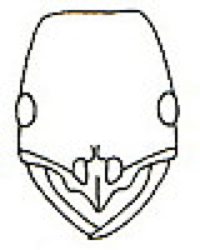 Head black, very
shiny, with
few scattered minute punctures; eyes small, diameter no greater than
length of 3rd segment of funiculus; TL 5.1 mm; shiny black, appendages
brown Head black, very
shiny, with
few scattered minute punctures; eyes small, diameter no greater than
length of 3rd segment of funiculus; TL 5.1 mm; shiny black, appendages
brown |
Zaïre - ravida |
| -- | Head brown or black, if the latter with numerous distinct punctures; eyes larger, diameter greater than length of 3rd segment of funiculus | 34 |
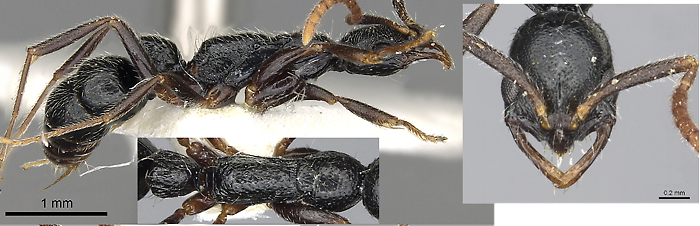
| 34 | 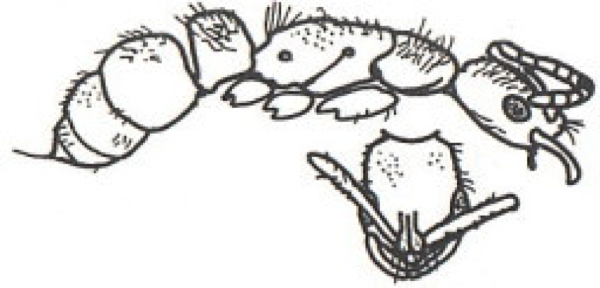 Larger species, TL
4.5-4.9
mm, HL > 0.95, SL > 0.85, with longer petiole; full adult
colour black Larger species, TL
4.5-4.9
mm, HL > 0.95, SL > 0.85, with longer petiole; full adult
colour black |
. |
| . |  |
West Africa - elegans |
| -- | 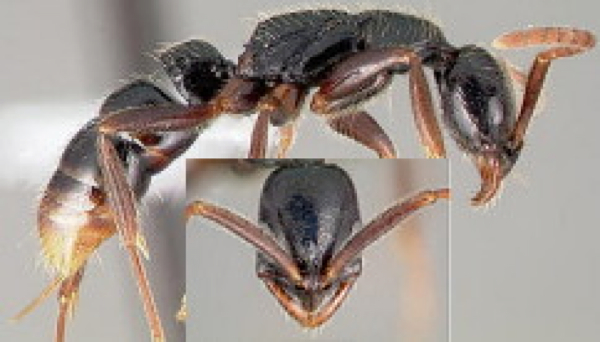 Smaller species, TL
4.1-4.3
mm, HL < 0.90, SL < 0.85, with shorter petiole; full
adult colour brown Smaller species, TL
4.1-4.3
mm, HL < 0.90, SL < 0.85, with shorter petiole; full
adult colour brown |
East Africa - ferrarii |
| -- | 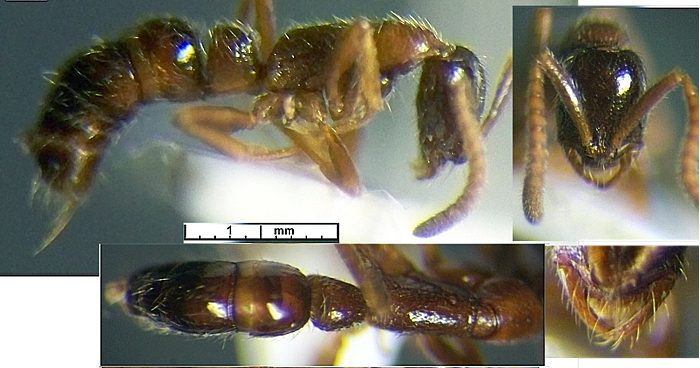 Smaller species, TL ca 3.7 mm; HL 0.72 HW 0.6, SL 0.67 EL 0.11, PW 0.44;
CI 85, SI 114; head with near parallel sides; with plentiful sub-erect short pilosity; full adult dark red-brown Smaller species, TL ca 3.7 mm; HL 0.72 HW 0.6, SL 0.67 EL 0.11, PW 0.44;
CI 85, SI 114; head with near parallel sides; with plentiful sub-erect short pilosity; full adult dark red-brown |
Senegal - Niakafiri new species |
| -- |
Mandibles short, usually quite stout, with convex inner margins, capable of closing against clypeus | -- |
| 35 | 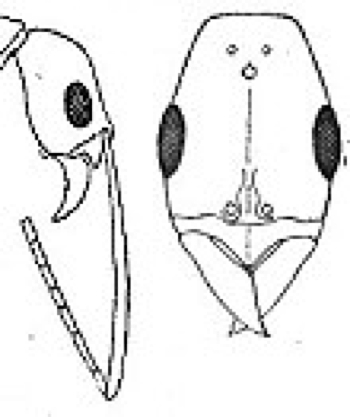 Propodeal dorsum with
a
central longitudinal groove behind a broad transverse impression;
massive broad mandibles; long antennal scapes (SI > 220); TL
8.0-8.4 mm; black, appendages brown Propodeal dorsum with
a
central longitudinal groove behind a broad transverse impression;
massive broad mandibles; long antennal scapes (SI > 220); TL
8.0-8.4 mm; black, appendages brown |
West Africa and Congo Basin - ergatogyna |
| -- | Propodeal dorsum without a central groove and transverse impression; mandibles otherwise; shorter antennal scapes (SI < 200) | 36 |
| 36 | Dorsum of head coarsely reticulate-punctate or very densely punctulate over all or mostly so | 37 |
| -- | Dorsum of head smooth and shining or no more than finely reticulate | 43 |
| 37 | Minute species, HL < 0.85, PW < 0.50; eyes minute | 38 |
| -- | Larger species, HL > 1.10, PW > 0.65; eyes with more than 10 facets | 40 |
| 38 | 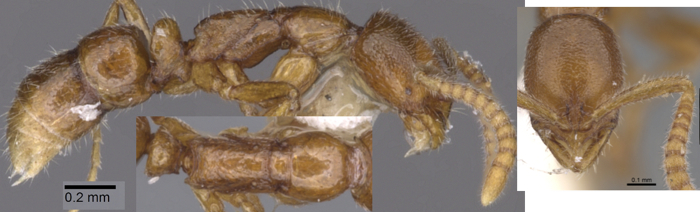 Pronotal
dorsum unsculptured, smooth and shining; TL 2.1-2.3 mm; yellow-brown Pronotal
dorsum unsculptured, smooth and shining; TL 2.1-2.3 mm; yellow-brown |
Nigeria - khaura |
| -- | Pronotal dorsum strongly sculptured | 39 |
| 39 | 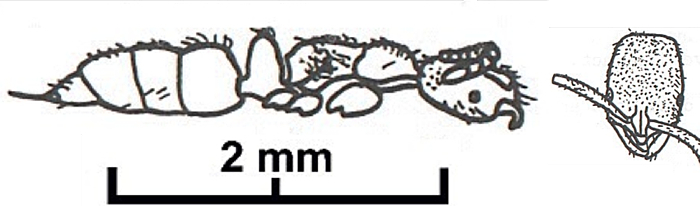 Antennal scapes
longer (SI
< 118), eyes with more than 10 facets, mature adult black; TL
3.0-3.2 mm; black, legs and scapes brown, funiculus yellow-brown Antennal scapes
longer (SI
< 118), eyes with more than 10 facets, mature adult black; TL
3.0-3.2 mm; black, legs and scapes brown, funiculus yellow-brown |
. |
| , | 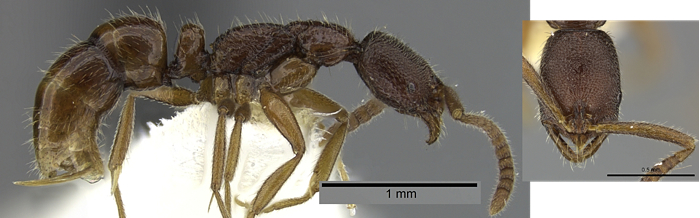 |
West Africa - stygia |
| -- | 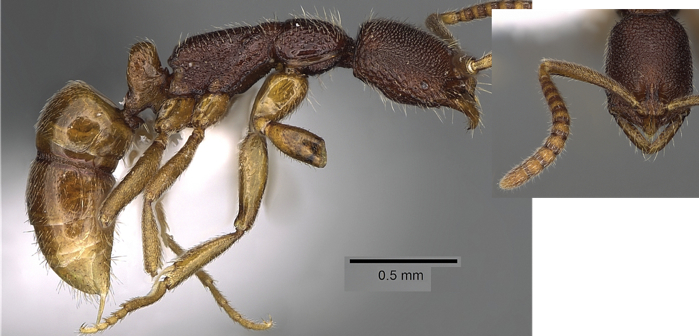 Antennal scapes shorter (SI
< 116), eyes with less than 10 facets, TL 2.6-3.1 mm; mature
adult yellow-brown Antennal scapes shorter (SI
< 116), eyes with less than 10 facets, TL 2.6-3.1 mm; mature
adult yellow-brown |
Ghana - cryptica |
| 40 | 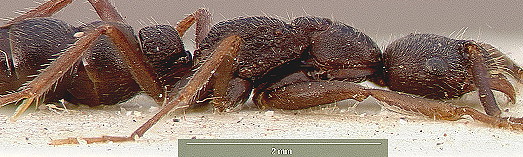 Tergites
of gaster segments 1 & 2 wholly
covered with dense, fine reticulo-puncturation; TL 6.5-6.8 mm Tergites
of gaster segments 1 & 2 wholly
covered with dense, fine reticulo-puncturation; TL 6.5-6.8 mm |
Zimbabwe - furtiva |
| -- | Tergites of gaster segments 1 & 2 wholly shiny | 41 |
| 41 | 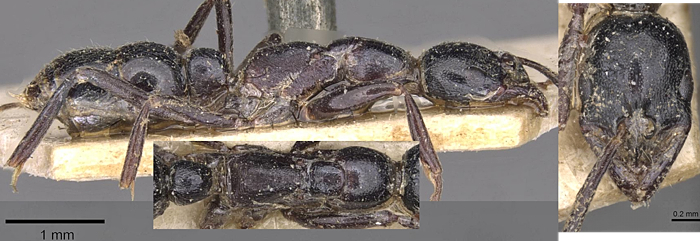 Dorsum of
pronotum smooth except for scattered small hair pits; TL 6.7 mm Dorsum of
pronotum smooth except for scattered small hair pits; TL 6.7 mm |
South Africa - peringueyi |
| -- | Dorsum of pronotum with dense fine sculpturation | 42 |
| 42 | 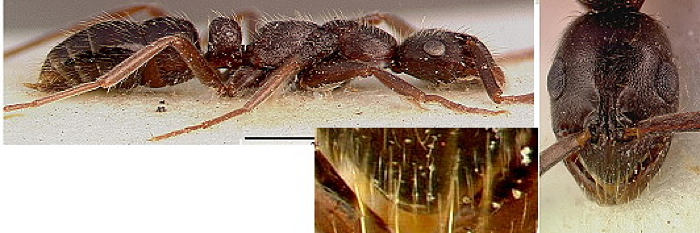 Clypeus with
indistinct
narrow fringing lamella; TL 5.9-6.8 mm; antennal scapes relatively
short SI < 140; eyes large; dark brown or black, appendages
lighter Clypeus with
indistinct
narrow fringing lamella; TL 5.9-6.8 mm; antennal scapes relatively
short SI < 140; eyes large; dark brown or black, appendages
lighter |
Zimbabwe - arnoldi |
| -- | 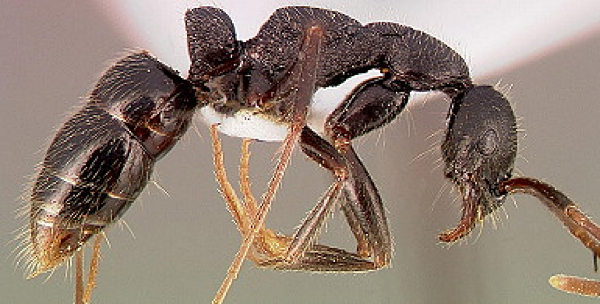 Clypeus
with broad distinct fringing lamella; TL
6.7-7.2 mm; scapes relatively long SI > 140; eyes smaller Clypeus
with broad distinct fringing lamella; TL
6.7-7.2 mm; scapes relatively long SI > 140; eyes smaller |
South Africa - havilandi |
| -- |
Dorsum of head smooth and shining or no more than finely reticulate | -- |
| 43 | 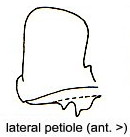 Ventral process of petiole
complex, double, with a large lobe or tooth anteroventrally and a
separate smaller more posterior lobe or tooth Ventral process of petiole
complex, double, with a large lobe or tooth anteroventrally and a
separate smaller more posterior lobe or tooth |
44 |
| -- | 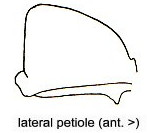 Ventral process of petiole
variable but simple and single Ventral process of petiole
variable but simple and single |
46 |
| 44 | 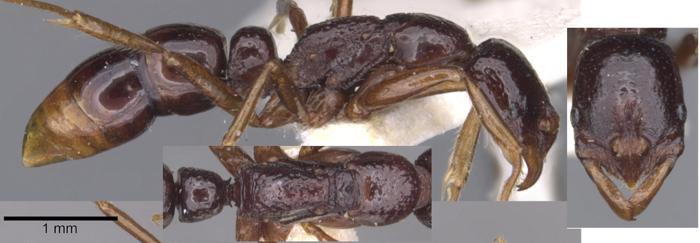 Head with
sides and ventral area sculptured; petiole profile decreasing in
thickness from base to apex; TL 5.8-5.9 mm; red-brown Head with
sides and ventral area sculptured; petiole profile decreasing in
thickness from base to apex; TL 5.8-5.9 mm; red-brown |
Zaïre - strator |
| -- | Head with sides and ventral area unsculptured; petiole profile increasing in thickness from base to apex | 45 |
| 45 | 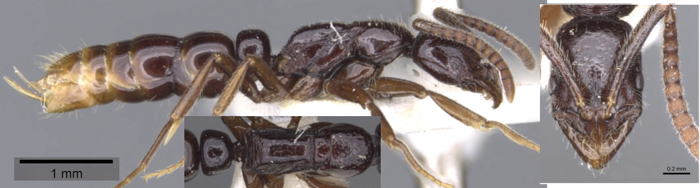 Dorsum of
pronotum with numerous fovea; smaller, TL 5.4 mm, with short scapes SL
< 1.10; uniform red-brown Dorsum of
pronotum with numerous fovea; smaller, TL 5.4 mm, with short scapes SL
< 1.10; uniform red-brown |
Cameroun - honoria |
| -- | Dorsum of pronotum smooth;
larger, TL 5.9-6.1 mm, with longer scapes SL > 1.10; uniform
red-brown |
. |
| . | 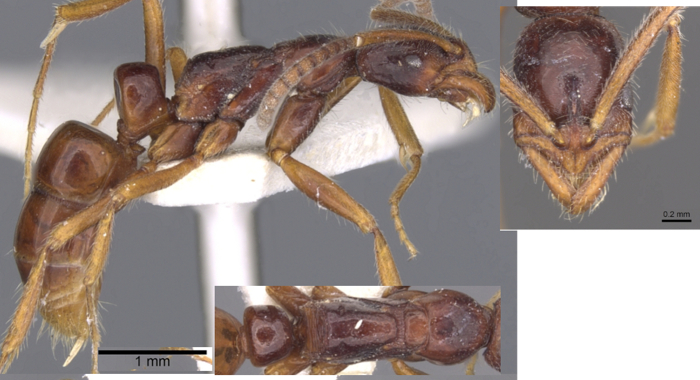 |
Zaïre - ankhesa |
| 46 | Antennal scapes with SL > 1.40 | 47 |
| -- | Antennal scapes with SL < 1.30 | 50 |
| 47 | 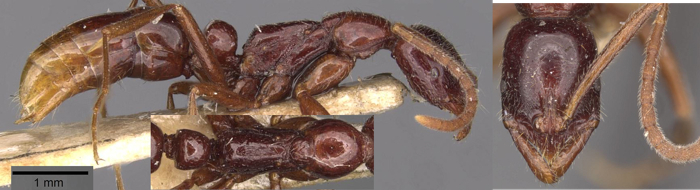 Eye
diameter no wider than scape; petiole with ventral process a broad lobe
with a posteroventral tooth; TL 7.4 mm; colour red-brown Eye
diameter no wider than scape; petiole with ventral process a broad lobe
with a posteroventral tooth; TL 7.4 mm; colour red-brown |
Ethiopia - buyssoni |
| -- | Eye diameter greater than scape; petiole with ventral process a simple or acute lobe; colour black | 48 |
| 48 | 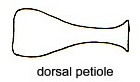 Larger species, TL 7.5-7.8
mm, with relatively long head and scapes also larger eyes; node of
petiole with distinct shape in dorsal view; black or blackish-brown,
with blusih or violet reflections, appendages lighter Larger species, TL 7.5-7.8
mm, with relatively long head and scapes also larger eyes; node of
petiole with distinct shape in dorsal view; black or blackish-brown,
with blusih or violet reflections, appendages lighter |
. |
| . | 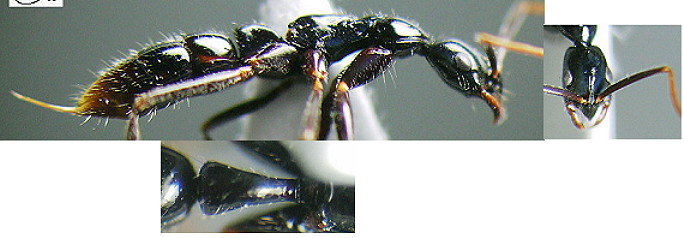 |
South Africa - attenuata |
| -- | 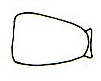 Smaller with smaller eyes;
petiole in dorsal view only slightly narrower anteriorly Smaller with smaller eyes;
petiole in dorsal view only slightly narrower anteriorly |
49 |
| 49 | 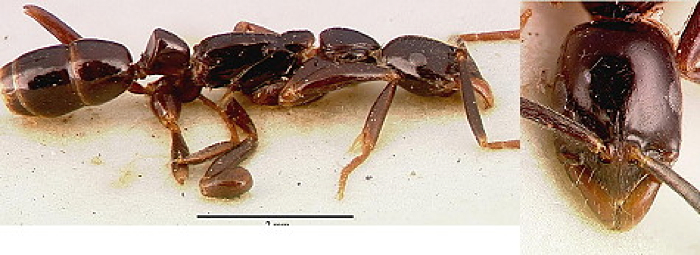 Mesonotum and
propodeum
without scattered large pits or punctures; TL 6.2-7.2 mm; black,
appendages brown or yellow-brown Mesonotum and
propodeum
without scattered large pits or punctures; TL 6.2-7.2 mm; black,
appendages brown or yellow-brown |
South Africa - crassinoda |
| -- | 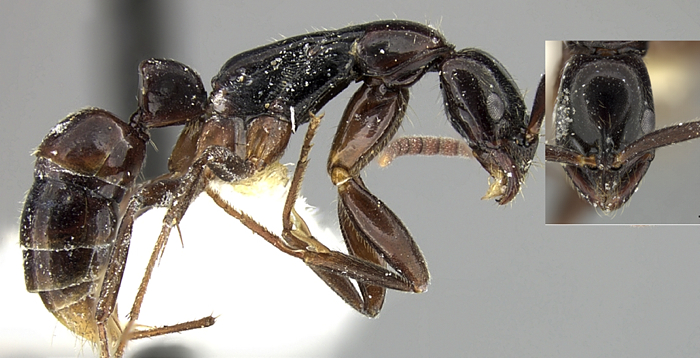 Mesonotum and propodeum with
scattered large pits or punctures; TL 7.0 mm; black, appendages brown Mesonotum and propodeum with
scattered large pits or punctures; TL 7.0 mm; black, appendages brown |
Cameroun - bubastis |
| 50 | 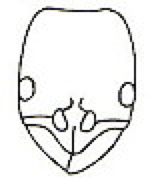 Antennal
scapes relatively
short SI < 95; TL 4.5-4.8 mm; red-brown Antennal
scapes relatively
short SI < 95; TL 4.5-4.8 mm; red-brown |
. |
| . | 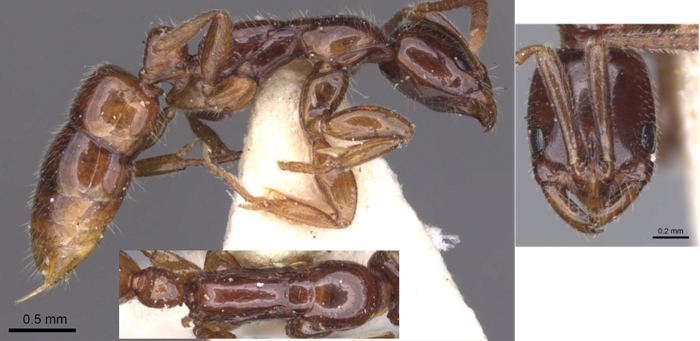 |
South Africa - mactans |
| -- | Antennal scapes relatively long SI 100 or more | 51 |
| 51 | 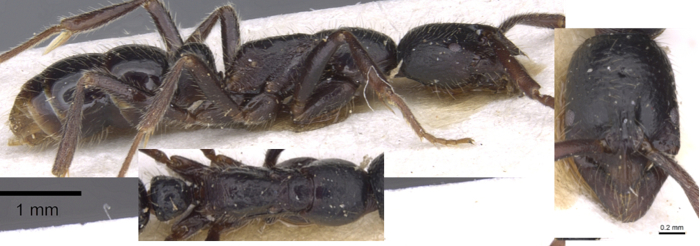 Mandibles
with dense fine longitudinal striation; dorsum of head and pronotum
with dense but superficial reticulation; TL 5.6 mm; black with faint
bluish opalescence, appendages brown Mandibles
with dense fine longitudinal striation; dorsum of head and pronotum
with dense but superficial reticulation; TL 5.6 mm; black with faint
bluish opalescence, appendages brown |
Cameroun - striatidens |
| -- | Mandibles smooth and shining; also dorsum of head and pronotum | 52 |
| 52 | 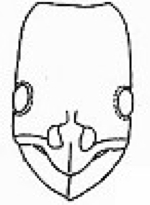 Eye with broad
encircling
impression, so that eye appears sunk in head; head elongate; TL 5.2 mm;
medium brown, gaster lighter, appendages dark yellow-brown Eye with broad
encircling
impression, so that eye appears sunk in head; head elongate; TL 5.2 mm;
medium brown, gaster lighter, appendages dark yellow-brown |
. |
| . | 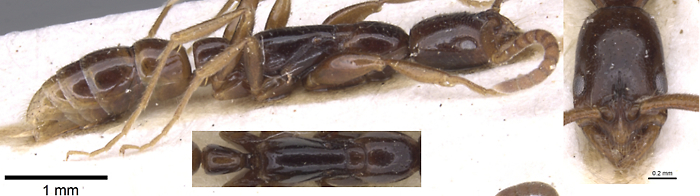 |
Cameroun - amon |
| -- | Eye with no more than slight encircling impression and not sunk into head | 53 |
| 53 | 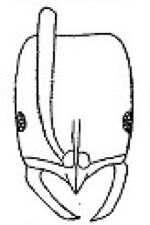 Antennal scapes
relatively
and absolutely shorter SL < 0.75 SI < 120; TL 3.5-4.1 mm;
light yellow-brown to light brown Antennal scapes
relatively
and absolutely shorter SL < 0.75 SI < 120; TL 3.5-4.1 mm;
light yellow-brown to light brown |
. |
| . | 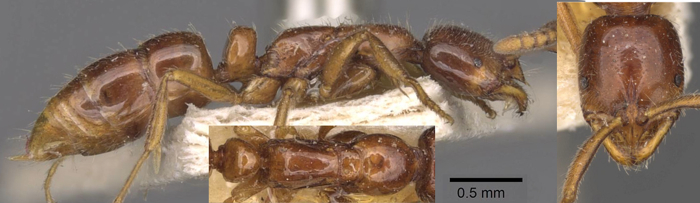 |
Southern Africa - castanea |
| -- | Antennal scapes relatively and absolutely longer SL > 0.75 SI > 120 | 54 |
| 54 | 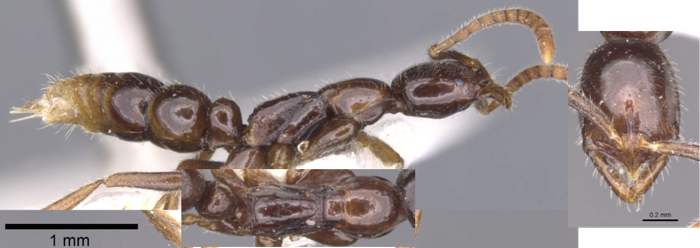 Smaller
species, TL 3.9 mm, HL ca 0.86, HW ca 0.62; petiole with ventral
process an elongate recurved tooth; shiny deep brown Smaller
species, TL 3.9 mm, HL ca 0.86, HW ca 0.62; petiole with ventral
process an elongate recurved tooth; shiny deep brown |
Cameroun - diatra |
| -- | Larger species HL > 0.90, HW > 0.65; petiole with ventral process a simple lobe | 55 |
| 55 | 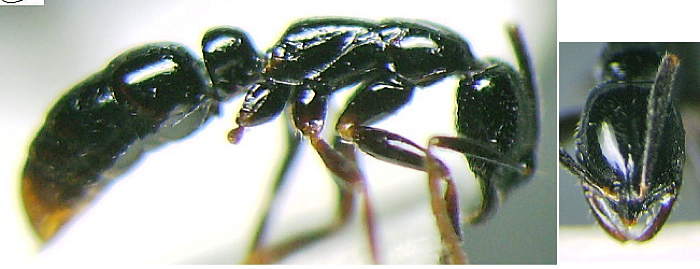 Eyes
larger diameter > 0.11 and set well
forward on head; TL 4.6-5.7 mm; colour variable from jet-black to light
brown Eyes
larger diameter > 0.11 and set well
forward on head; TL 4.6-5.7 mm; colour variable from jet-black to light
brown |
Eastern & southern Africa - intermedia |
| -- | 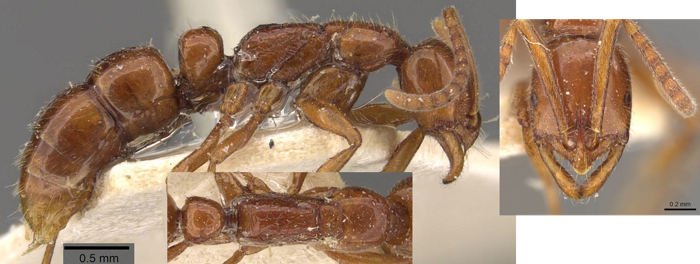 Eyes
smaller diameter ca 0.09
and set well back on head; TL 4.7 mm; uniform orange-brown or light
brown Eyes
smaller diameter ca 0.09
and set well back on head; TL 4.7 mm; uniform orange-brown or light
brown |
Ethiopia - piroskae |
 |
PONERINAE Introduction |
© 2007, 2008, 2009, 2010, 2013, 2015, 2016 - Brian
Taylor CBiol FRSB FRES 11, Grazingfield, Wilford, Nottingham, NG11 7FN, U.K. |
href="leptogenys.htm"